Introduction
Ledger.com/start is the official starting point for users who want to securely manage their cryptocurrencies using Ledger hardware wallets and Ledger Live. Ledger has become one of the most trusted names in cryptocurrency security, offering hardware wallets that keep private keys offline and safe from cyberattacks. Ledger.com/start guides users through the setup process, from initial device configuration to installing Ledger Live and managing multiple cryptocurrencies securely.
In the digital era, protecting cryptocurrency holdings is critical due to threats like malware, phishing, and hacking. Ledger’s ecosystem provides a comprehensive solution that combines hardware security with a user-friendly interface through Ledger Live, empowering users to control their digital assets safely.
What is Ledger.com/start?
Ledger.com/start is a resource hub provided by Ledger to help new users set up their devices and get started with Ledger Live. It includes step-by-step instructions for initializing Ledger hardware wallets, installing the Ledger Live software, and connecting your device to manage cryptocurrencies securely.
Ledger.com/start provides official guidance that ensures users follow best security practices while using their devices. This is crucial because improper setup or downloading Ledger Live from untrusted sources can compromise funds.
Ledger Hardware Wallets
Ledger hardware wallets, such as Ledger Nano S Plus and Ledger Nano X, are physical devices designed to store cryptocurrency private keys offline. These devices act as secure vaults, preventing exposure to online threats.
- Ledger Nano S Plus: A compact, reliable wallet supporting hundreds of cryptocurrencies.
- Ledger Nano X: A more advanced wallet with Bluetooth connectivity, larger storage capacity, and mobile device compatibility.
Ledger hardware wallets are built with certified secure chips and advanced cryptography to ensure that your private keys never leave the device. Even if your computer is compromised, your assets remain safe.
Getting Started with Ledger.com/start
Following the official instructions on Ledger.com/start ensures proper setup of your Ledger device. The process involves several key steps:
- Purchase a Ledger Device: Only buy from the official Ledger website or trusted resellers to avoid tampered devices.
- Visit Ledger.com/start: Follow the official guide for device initialization and setup.
- Install Ledger Live: Ledger Live is the software interface to manage cryptocurrencies. Download it from the official Ledger website.
- Initialize Your Device: Set a secure PIN and write down your recovery phrase (24 words) offline.
- Connect Ledger Live: Link your device to Ledger Live to start managing cryptocurrencies, installing apps, and tracking your portfolio.
Ledger Live Overview
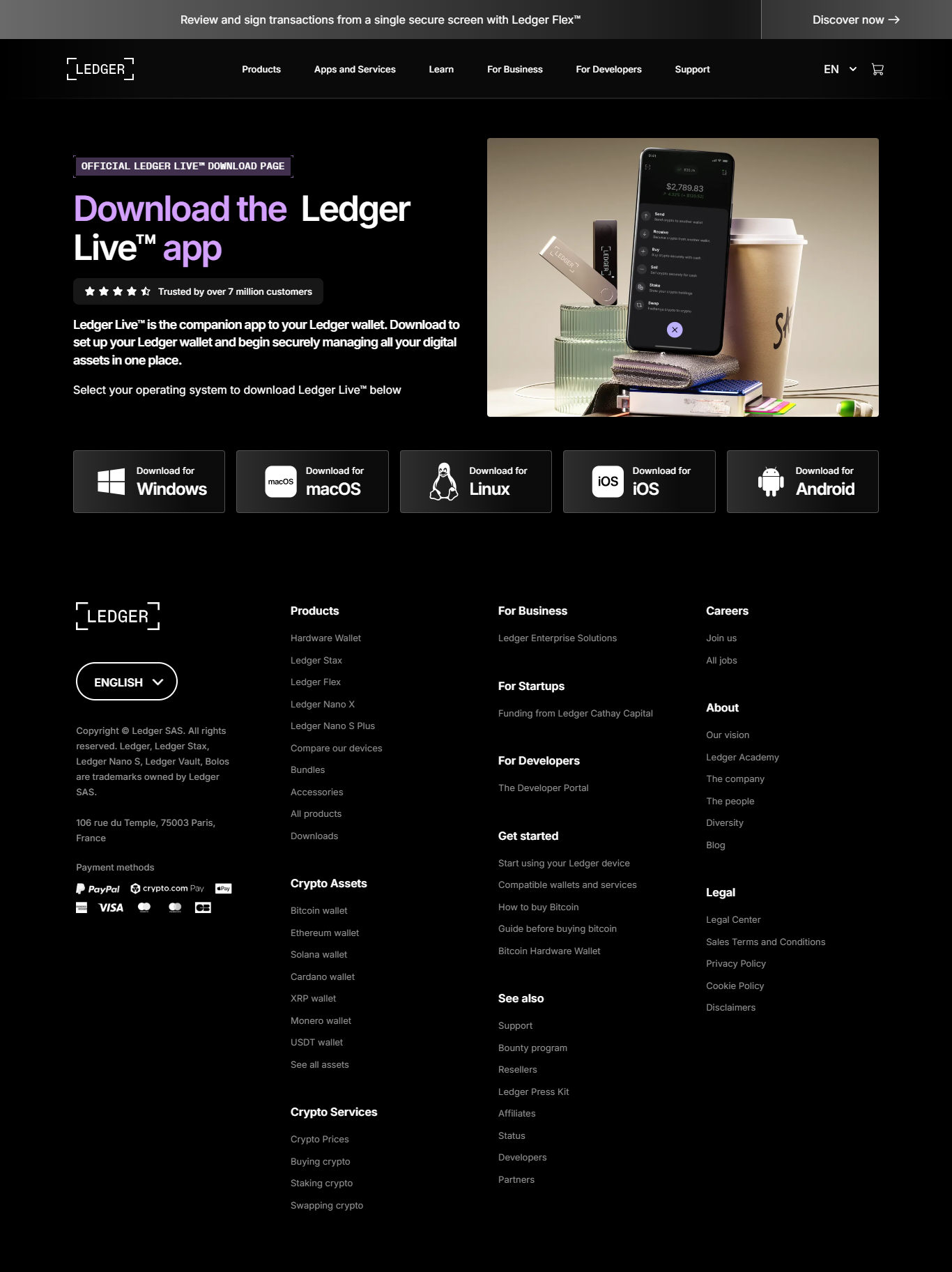
Ledger Live is the software companion to Ledger hardware wallets, available for desktop (Windows, macOS, Linux) and mobile (iOS, Android). Ledger Live enables users to:
- View portfolio balances and performance in real-time.
- Send and receive cryptocurrencies securely.
- Install and manage cryptocurrency apps on your Ledger device.
- Exchange cryptocurrencies directly within the app.
- Track transaction history for each account.
The integration between Ledger Live and Ledger hardware wallets ensures that all private keys remain offline, and all transactions must be verified physically on the device.
Installing Ledger Live
Installing Ledger Live is straightforward. Steps include:
- Download Ledger Live from Ledger’s official website.
- Follow installation instructions for your operating system.
- Open Ledger Live and select “Get Started.”
- Choose whether you have a new device or want to restore an existing wallet.
- Connect your Ledger hardware wallet using a USB cable (or Bluetooth for Nano X).
Initializing Your Ledger Device
Proper initialization is crucial for security:
- Set a strong PIN code. Avoid simple sequences like 1234.
- Write down the 24-word recovery phrase offline. Do not store it digitally or share it online.
- Confirm the recovery phrase on the device to ensure it was recorded correctly.
- Never enter the recovery phrase into a computer or online platform.
Adding Cryptocurrency Accounts
Ledger Live allows you to manage multiple cryptocurrencies by adding separate accounts for each supported coin. Supported currencies include Bitcoin, Ethereum, Ripple, Litecoin, Cardano, and hundreds of others.
- Open Ledger Live and go to “Accounts.”
- Select “Add Account” and choose your cryptocurrency.
- Follow on-screen instructions to synchronize your Ledger device.
- Repeat for additional cryptocurrencies.
Sending and Receiving Cryptocurrencies
All transactions must be verified on your Ledger device, ensuring private keys remain offline:
- Send: Enter the recipient address and amount in Ledger Live, then confirm on your device.
- Receive: Generate a receiving address using Ledger Live, and verify it on your device before sharing.
Backup and Recovery
The recovery phrase is essential for restoring your wallet if the device is lost, stolen, or damaged. Best practices include:
- Store your recovery phrase offline, in a secure location.
- Do not take pictures or store it digitally.
- Use the recovery phrase only with Ledger devices for restoration.
Security Features
Ledger devices and Ledger Live are designed with multiple layers of security:
- Private keys are stored offline on a secure chip.
- All transactions must be confirmed physically on the device.
- PIN and passphrase protection adds additional security layers.
- Ledger Live verifies device authenticity to prevent tampering.
Firmware Updates
Regular firmware updates are critical for security and performance. Ledger Live notifies users of updates. Steps for updating:
- Connect your Ledger device to Ledger Live.
- Go to “Manager” and check for firmware updates.
- Follow on-screen instructions to safely update the device.
Using Ledger with DeFi and Web3 Applications
Ledger hardware wallets integrate with various DeFi and Web3 platforms, allowing secure interaction with decentralized finance apps without exposing private keys. Examples include:
- Connecting Ledger to MetaMask for Ethereum and other EVM-compatible chains.
- Using Ledger Live’s integration with select staking and swapping platforms.
- Managing tokens on decentralized exchanges safely through Ledger verification.
Best Practices for Ledger Users
- Always use official Ledger devices and software.
- Keep firmware and Ledger Live updated.
- Verify transaction details physically on your device.
- Never share your recovery phrase with anyone.
- Store recovery phrases securely offline, in multiple backup locations.
Troubleshooting Common Issues
- Device not recognized: check USB cable, try another port, or restart Ledger Live.
- Ledger Live errors: reinstall software from official source.
- PIN entry errors: follow device instructions carefully; repeated failures temporarily lock the device.
- Firmware update problems: ensure device has enough battery and follow update instructions precisely.
Conclusion
Ledger.com/start is the official gateway for users to safely set up and manage their Ledger hardware wallets and Ledger Live. By following its instructions, users ensure that private keys remain offline and protected from digital threats. Ledger’s ecosystem of hardware wallets, Ledger Live, and DeFi integrations provides a comprehensive and secure solution for managing multiple cryptocurrencies.
By following best practices, including secure storage of recovery phrases, verifying transactions on the device, and keeping firmware updated, Ledger users can confidently protect and manage their digital assets. Ledger.com/start is the first step in building a secure cryptocurrency management workflow for both beginners and experienced users.
Whether you are sending, receiving, or staking cryptocurrencies, Ledger and Ledger Live together provide a trusted, secure, and user-friendly solution for all your crypto management needs.